
Alcohol and Creativity
The quest for creative flow

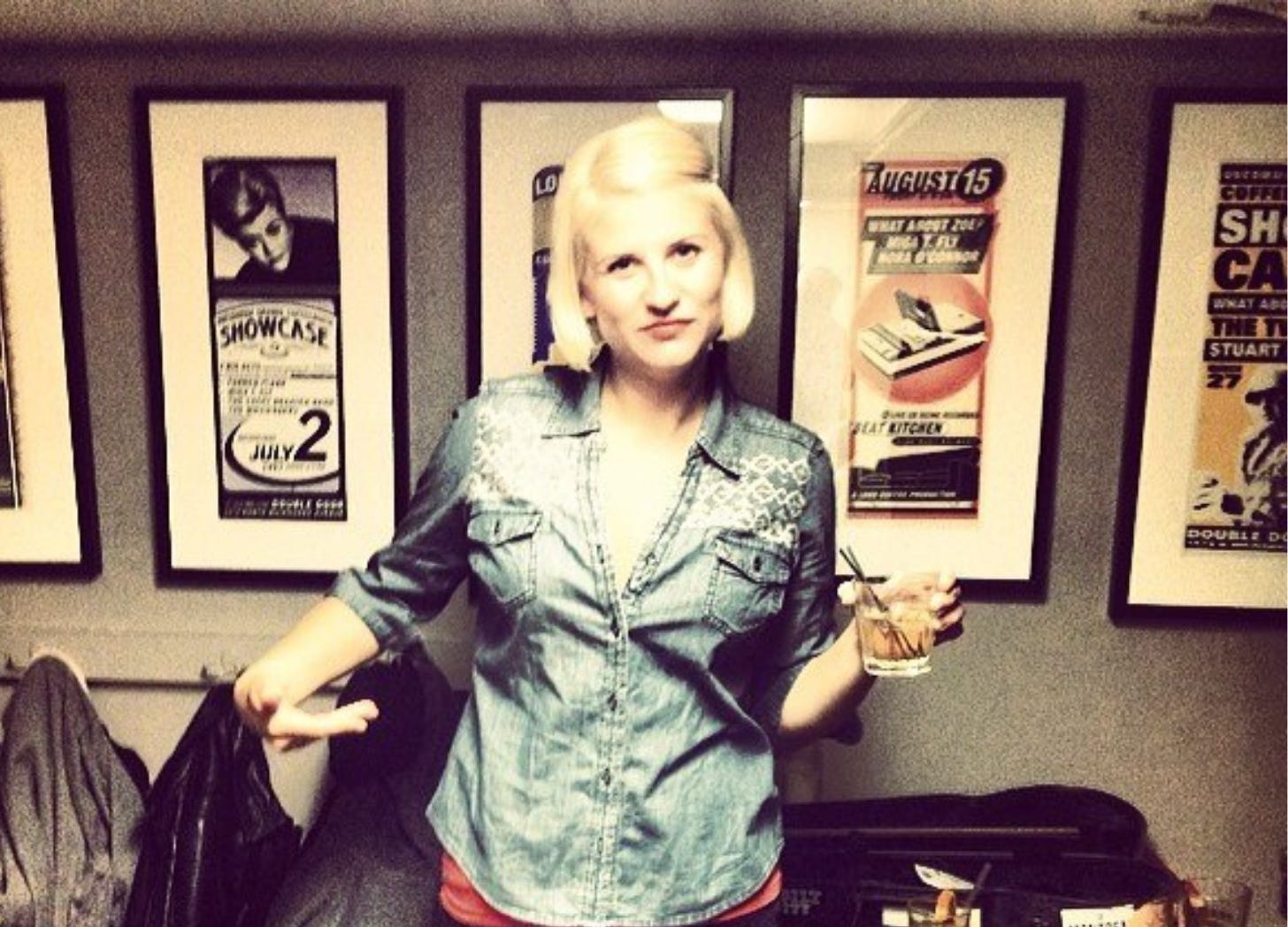
The author in ~2014 backstage with a bourbon and club soda.
The Flow:
Creative flow is like being in love.
It feels different for everyone, and it can be hard to articulate what it actually feels like.
But, like love, you always know when you’re in it.
For me, it’s a deep sense of calm.
My heart starts to beat slower, my limbs feel grounded, and everything but what I’m working on vanishes from around me, like the edges of your vision blur just before you faint.
When I’m in that state, I feel like I’m floating at the bottom of the ocean in the deep, dark, calm waters; totally at peace. Far away from the surface disruption.
Sometimes flow state occurs spontaneously because what I’m working on is so engaging that everything else naturally falls away.
But more often, I need to actively sink into those depths to find it.
Which isn’t always that easy.
The Noise:
Just like it’s hard to love a partner who isn’t showing up for you, being deeply connected to our creativity is almost impossible when we’re struggling with financial stress, fear of failure, or a lack of practical support.
The surface disruptions that most often block us from reaching our creative depths are a rotating cast of self-doubt, fear, expectations, overthinking, maladaptive perfectionism, and stress.
With all of this obstructing our access to our creative flow, coupled with a strong artistic desire to continue creating, no wonder it’s so common for musicians to turn to drugs and alcohol to turn down the volume on the emotional noise.
When we’re a few drinks in, our inner critic finally shuts up for five minutes, and, now, the depths we’ve been seeking are within view.
We pick up the guitar, and our ideas start to flow.
We walk out on stage feeling relaxed and calm.
Truly, one of the quickest ways to press mute on your fear and anxiety is to drink or get high.
But it comes at a cost.
The Numbing:
Alcohol and drugs turn down the volume on the emotional noise by numbing it.
And, while it might work in the short term, when you want to come up again from the intensity of the emotional depths and be back in the joy and light, the same numbing qualities of alcohol make it almost impossible to swim up.
Our culture has long glamorized alcohol and drug use in musicians, think “sex, drugs, and rock n roll”, the “27 club” (Amy Winehouse, Kurt Cobain, Jimi Hendrix, Janis Joplin, and Jim Morrison) and the tortured artist trope; the classic scene of a broody songwriter putting words to a whiskey-blotted page, or a band lost in a drug-fueled performance for hours on stage.
Musicians have been turning to alcohol and drugs for so long to deal with the emotional, physical, and spiritual stress of the job that they don’t think there’s another option.
At first, it seems easier to have two glasses of wine than face your crippling self-doubt about your career.
A beer takes the edge off financial stress when you’re on an indie tour.
A few shots at the bar are quicker than doing the work to regulate your emotions after a big show.
Getting high every day is cheaper and easier than the years-long journey it can take to work through the sense of worthlessness that no accolade or large crowd can ever fix.
The Understanding:
I’m not here to judge people for using alcohol to survive this music life.
I started drinking in my early teens, and I can clearly remember sitting backstage before a mid-tour show a few years ago, feeling burned out and depressed, drinking tequila straight from the bottle because I believed that was the only way I was going to get through the show. One of many moments like that in the last twenty years of touring.
Using alcohol and weed to cope with the stressors of music life is completely understandable.
Not only is it part of the musician lore, but it’s so widely accepted that musicians like to party that no one gives a second glance to us having a cocktail (or 3) at work - in fact, someone often hands you one as you walk out on stage.
It’s such a part of our industry that it’s the most obvious thing to turn to when the stress of the job starts to get in the way of the creative urge that inspired you to become a musician in the first place.
And a lot of fantastic art has been created through the booze and weed haze.
But relying on substances too much can lead you down a mental health path that’s hard to come back from.
The Facts:
Using drugs and alcohol to numb the emotional barrier and find creative flow might work in the short term, but what’s harder to see in the moment is what happens next.
When your buzz wears off, you still have self-doubt, a nervous system stuck in fight or flight, and crippling fear, but you’ve invited alcohol’s bff, depression, to the party as well.
Alcohol use can trigger or worsen depression by disrupting brain chemistry (like serotonin and dopamine), while depression can lead people to drink as a misguided way to cope, creating a harmful cycle of worsening symptoms, poor sleep, and impaired emotional regulation.
Alcohol is a depressant, and while it may offer temporary relief, it ultimately interferes with mood stability, making both alcohol use disorder (AUD) and depressive disorders more severe and harder to treat.
This depressive creative cycle is why musicians suffer from alcohol use disorders, depression, and suicidal ideation in such higher numbers than the average population.
According to the Musicares 2025 Wellness In Music Survey, musicians in the U.S. show mental health indicators that are significantly higher than national averages, and the measured rate of suicidal thoughts among musicians (~11.4%) is more than double the national adult rate (~5%).
Using substances to connect with your creativity can be dangerous.
Thankfully, there is another way to get past the noise other than numbing it: facing it.
The Hope:
Your creative flow is always waiting for you.
It’s in the calm, quiet depths of your ocean, just below the surface noise.
When you take the time to face the self-doubt, perfectionism, anxiety, stress, or depression, and do the work to rebuild your relationship with them, you start to have consistent access to the deepest, most pure source of your creative inspiration.
And that’s when you will start creating what you want, when you want, in a way that leaves you energized and in love with the process, not hungover and depressed.
This path is longer and harder. It’s a hell of a lot easier to do a few shots than deal with your shit. But you don’t have to face any of this before you’re ready.
Just remember that the parts of you you’re numbing don’t go quiet — they wait, and they keep you from sinking into the depths you’re looking for.
But learning to heal the parts of yourself you’ve been numbing ultimately leads to a deeper connection with your creativity.
To a flow that you’re now fully present for and is connected to your deepest, truest self.
Ditching booze is a creativity booster - contrary to what we’ve been conditioned to believe.